



May 15, 2026
May 13–15, 2026 – The 29th IEEE International Conference on Computer Supported Cooperative Work in Design (CSCWD 2026) was successfully held at Fuyao University of Science and Technology. Organized by the School of Intelligent Manufacturing and Future Technologies of the university, the conference attracted over 400 experts, scholars, and industry practitioners from more than ten countries and regions, including Australia, Brazil, Canada, Chile, Denmark, New Zealand, France, Portugal, and Singapore, to attend in person. In addition, over 200 experts and scholars from about twenty other countries participated online. The conference focused on cutting-edge achievements, key technologies, and future trends in collaborative design, injecting new momentum into the intelligent collaboration of complex systems.
Collaborative Innovation, Intelligent Empowerment
The International Conference on Computer Supported Cooperative Work in Design (CSCWD), initiated in 1996 and sponsored by the Institute of Electrical and Electronics Engineers (IEEE), is dedicated to advancing the application of collaborative technologies in the design of processes, products, systems, and services across industry and society. Continuing its theme of "Collaborative Innovation, Intelligent Empowerment," this year’s conference focused on the development of collaborative technologies and their diverse applications in industrial and social scenarios. Key topics include human-computer interaction, business process management, collaborative virtual environments, enterprise modeling, and security and privacy protection, aligning closely with the urgent need for digital and intelligent transformation in global manufacturing.
The opening ceremony was chaired by Professor Weiming Shen, Dean of the School of Intelligent Manufacturing and Future Technologies at Fuyao University of Science and Technology, who introduced the academic positioning and specific arrangements of the conference.
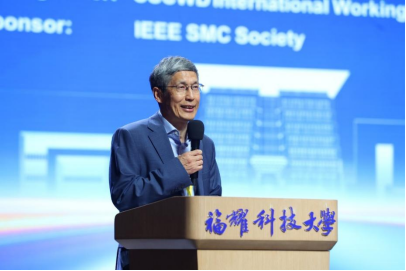
Figure 1: Prof. Weiming Shen, General Chair of CSCWD 2026
Dean of the School of Intelligent Manufacturing and Future Technologies
Professor Shuguo Wang, President of Fuyao University of Science and Technology, delivered a welcome speech on behalf of the university. He expressed the hope that the university would take this conference as an opportunity to build a high-level, open platform for researchers in collaborative design, fostering cross-border academic interaction and long-term cooperation among academic institutions.
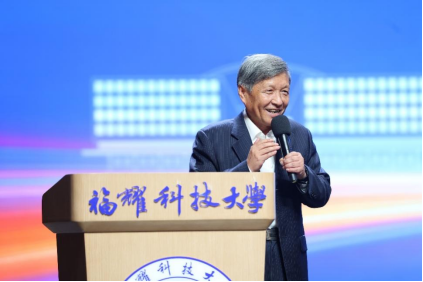
Figure 2: Prof. Shuguo Wang, President of Fuyao University of Science and Technology
As one of the founders of the CSCWD conference, Professor Jean-Paul Barthès, Professor Emeritus at the University of Technology of Compiègne, France, and Co-founder and Chair of the International Working Group on Computer Supported Cooperative Work in Design (CSCWD), reviewed the 30-year history of the conference. He noted that since its first edition in Beijing in 1996, the CSCWD has always focused on the core needs of complex product and system design, serving as an international platform for multidisciplinary integration and industry-university-research collaboration.
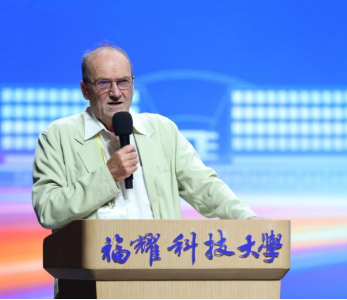
Figure 3: Prof. Jean-Paul Barthès, Co-founder of the CSCWD
Three Keynote Reports
During the conference, three internationally renowned scholars were invited to deliver keynote speeches, sharing groundbreaking research findings and cutting-edge insights in their respective fields, which sparked lively discussions and deep exchanges among attendees.
Professor Andrew Nee, Fellow of the Academy of Engineering Singapore, delivered a keynote titled "From Digital Twin to Metaverse." He systematically elaborated on the current state, industry trends, and future directions of digital twins, and deeply analyzed their role and practical challenges in the metaverse context. Prof. Nee pointed out that the metaverse, as a digital mirror of the real world, creates a fully connected, immersive 3D interactive space that will profoundly change human-computer interaction modes in manufacturing. The deep integration of digital twins, a mature system digitization technology, with the metaverse, is expected to propel humanity from "passively adapting to systems" to "dynamically participating in virtual interactions," opening new pathways for intelligent manufacturing.
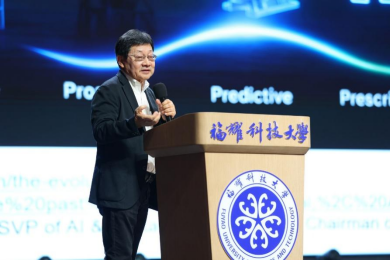
Figure 4: Prof. Andrew Nee, Fellow of the Academy of Engineering Singapore
Professor Chris Zhang, Fellow of the Canadian Academy of Engineering, gave a talk titled "Advances in resilience engineering of complex systems: from 2000s to present". Focusing on the three core characteristics of the Industry 5.0 era: resilience, sustainability, and human factors, he systematically traced the evolution of resilience engineering from the early 2000s to today. Prof. Zhang emphasized that resilience engineering theory holds significant value for disaster management and critical infrastructure protection. The integration of advanced artificial intelligence technologies will further enhance the adaptive and self-healing capabilities of complex systems, providing robust guarantees for the safe and stable operation of industrial systems.
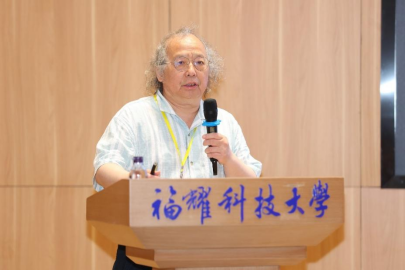
Figure 5: Prof. Chris Zhang, Fellow of the Canadian Academy of Engineering
Professor Bin Hu, Dean of the School of Medical Technology at Beijing Institute of Technology, presented on "Computational Psychophysiology and Mental Health", focusing on the severe challenges and technological breakthroughs in global mental health. He noted that traditional diagnosis relies mainly on physician interviews and scale assessments, lacking objective quantitative indicators, and that drug treatments often have significant side effects. With the rapid development of artificial intelligence and big data technologies, mental health diagnosis and treatment are accelerating their transformation toward data-driven screening and treatment. Prof. Hu believes that the interdisciplinary integration of computational psychophysiology will offer new solutions for precise and personalized mental health care.
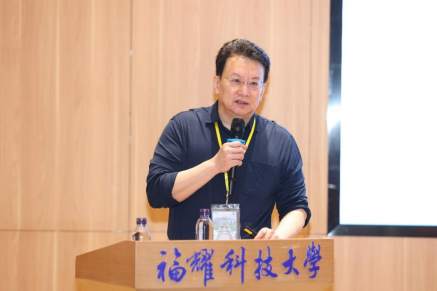
Figure 6: Prof. Bin Hu, Dean of the School of Medical Technology, Beijing Institute of Technology
120 Parallel Sessions with 26 Topics
In addition to three keynotes, the conference featured a total of 120 parallel sessions (90 onsite and 30 online). The sessions were divided into 16 regular session topics and 10 special session topics. The regular session topics covered areas such as agents and multi-agent systems, collaboration theory and methodology, collaboration platforms, software tools and services, applications of collaboration technologies in manufacturing, construction, healthcare, logistics, and the application of large language models in collaborative design. The special sessions focused on 10 frontier directions, including artificial intelligence and industrial intelligence, deep learning for cognitive manufacturing, and technology certification and trust in the AI era.
The 120 parallel sessions provided a platform for in-depth academic exchanges. Young scholars and graduate students actively shared their latest research progress, engaging in fruitful discussions and intellectual exchanges with senior domestic and international experts on scientific problem formulation, experimental data analysis, method design, and future collaboration directions. The conference not only helped young researchers broaden their academic horizons, improve their presentation skills, and establish international collaborations, but also promoted cross-disciplinary integration and innovation in the field of computer-supported cooperative work in design.
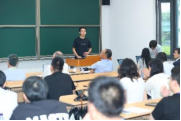
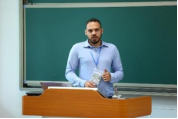
Figure 7: Highlights from parallel sessions
Conclusion
As the host of CSCWD 2026, Fuyao University of Science and Technology adheres to its positioning of research-oriented international university, focusing on technological innovation and the cultivation of top-tier innovative talents. Hosting CSCWD 2026 marks an important step for the university in deepening international academic exchanges and enhancing its disciplinary influence. In the future, the university will continue to leverage frontier areas such as intelligent manufacturing, collaborative design, and digital twins to strengthen global academic cooperation and industry-university-research collaborative innovation, striving to build a world-class academic exchange platform and talent cultivation hub. Through breakthroughs in collaborative design, the university aims to contribute to the enhancement of new quality productive forces in China.


No. 104, Zhihui Avenue, Fuzhou High-tech Industrial Development Zone, Fujian Province

University Office: 0591-62180087 Undergraduate Admissions Office: 0591-62180153

office@fyust.edu.cn








© 2025 FYUST 104 Zhihui Avenue, High-Tech Zone, Fuzhou, Fujian, China 350109 Email: office@fyust.edu.cn Tel: +86 (0)591-62180087


